
Hades The Game: The Story of An Average Teenager
- mythomapstories

- Oct 29, 2024
- 4 min read
Greek mythology is filled with incredible stories and fascinating characters, but one often overlooked yet incredibly important aspect is its adaptation into popular media. When I say overlooked, I don’t mean overlooked in the sense that they are not recognised or popular or they don’t earn well, but in the sense that their origins aren’t as appreciated as they should be. As things stand, Greek and Norse mythologies are lining pockets of industry giants in cinema, gaming and literature, and are often treated as original stories written by said industry giants and not necessarily something that originated hundreds of years ago. Think about all the projects that you have copied from the internet. Think about the ace grade you got for them, and the false impression in the mind of the teacher who gave that grade to you. Think of the original creator of that project, who has probably helped a thousand students pass. While his feelings don’t matter to you and your shiny new grade, it would always be an intriguing thought to sort of try and figure out what that person thought before they did that project - to either better understand it, or for the laughs and the giggles. Today, I would sacrifice two five star chocolates to Hermes and two to Apollo to earn my position as your storyteller here. (Please don’t search the words ‘Sacrifice for Hermes’ and/or try to replicate what you find on the internet, please, I will lose my job)
With the disclaimer out of the way, I would like to take this opportunity to introduce you to the world’s most potent stress reliever - Hades: The Video Game
Hades is an isometric rogue-like video game which means, very simply, it will bust your chops (in a fun way!) Anyway, I could have picked literally any game in the genre, because Greek Mythology has no shortage in that regard, but I picked this one specifically for two major reasons - it is both loosely adaptive of the actual myth, but also its own original story and its accessibility makes it one of the most playable video games on the planet. Mind you, this is not an attribution for its difficulty level, it is definitely not for the weak-hearted, but an attribution to how easy it is to run. As an isometric game, which means a lot of its elements are either static or are in a permanent fixed loop, Hades renders its scenes very quickly and very easily. On a mediocre laptop, the game has no issues displaying sixty frames per second, ensuring a smooth and enjoyable experience for anyone who decides to play the game. It is also available on Steam for a pretty cheap price these days, thus, it is affordable as well. Have I convinced you enough to play it? Please? Pretty please with a cherry on top?
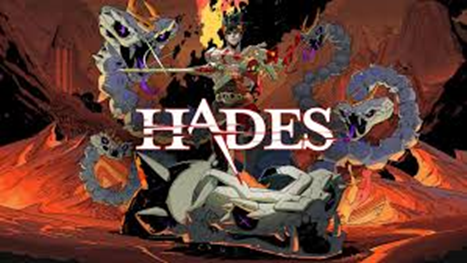
No? Oh well, I didn’t want to pull out the big guns, but you forced me to. (This joke will make sense later, trust me) The story of Hades is very simple - Zagreus, the son of Hades, is meant to stay in the underworld. He is a teenager (or whatever the teen equivalent is for immortal deities) thus, he does the most teenager thing in the world - he doesn’t stay in the underworld. Unfortunately for him, it is highly illegal to try and escape, thus his own father sends out thousands of wretches after him. Simple enough? You don’t know the half of it yet.
The gameplay of Hades is as complicated as it is simple. Trust me, there is no other way to put it. The game lets you control Zagreus, who is thrown into the underworld area of Tartarus, ie, the palace of Hades (also the place the gods use to torture criminals. It is messed up. I know) You are given nothing but hopes, dreams, and a sword named Stygius to defeat the forces of the underworld.(Also, the gods of olympus would drop by to help you. Why? They just want to, and if that isn’t the crux of Greek myth, I don’t know what is)
In your very first attempt to leave, you will feel a sense of progress, you may just feel accomplished! One chamber, two chambers, maybe even three, and then
Splat!

You die. Womp womp. But it’s okay, right? You made some progress. Hate to burst your Greek bubble, but you didn’t. The game forces you to start from the beginning. Again, and again, until you make it out in one go. What’s worse? Tartarus isn’t the only region, there are three more - Asphodel, Elysium and the Temple of the Styx. Each is more difficult than the last. Welcome to Hades, it is a nightmare you will fall in love with.

The game does instill some progress, though. Each run will grant you some progression materials and currency that you can spend on upgrades. The only way to beat a monster that is stronger than you is to get stronger, right?
The mythology is even more, and mind my language here, styx’ed up. Zagreus, in Orphic myth, a divine child who was the son of Zeus (as a snake) and his daughter Persephone. Zeus intended to make Zagreus his heir and bestow on him unlimited power, but Hera out of jealousy urged the Titans to attack the child while she beguiled him with toys. The Titans, who were opposed to Zeus’ power, (oops) tore Zagreus to pieces and consumed him except for his heart. Athena managed to save the child’s heart and brought it to Zeus, who swallowed it. (Eek) Zeus punished the Titans for their crime by blasting them into soot with his thunderbolts. From these remains arose mortals, who were partly wicked and partly divine. Zeus then begot a son in the body of Semele, (in more casual words, impregnated her) and this child, made from the heart of Zagreus, was called Dionysus. Zagreus thus came to be identified with Dionysus in Orphic mythology, an outgrowth of the Hellenistic mystery religion based on the teaching and songs of Orpheus.
This information, courtesy of Britannica explains the lore of Zagreus, the protagonist of Hades. Insane origins, right? I thought so, too. Hades is a wonderful experience that will teach you about Olympus and the greek gods in a way that anything else seldom does.


Comments